Install Windows Vista in 2Minutes
Stuxnet Demonstration
13 life tips children teach us

1. Be completely present in the moment.
In the words of David M. Bader: „Be here now. Be someplace else later. Is that so complicated?“ We adults are often living in the past (or have our heads in the future). Many adults carry around preconceptions, prejudices, and even anger about something that happened years ago – even hundreds of years ago before anyone they even know was born. And yet, very young children do not worry and fret about the past or the future. What matters most is this moment. “The most precious gift we can offer others is our presence,“ says Thich Nhat Hanh.
2. Allow for spontaneity.
We are often overly rigid and worry too much about what others may think or say, so we edit ourselves before we even try. I am not talking about anarchy, I am talking about bringing back some of that childlike behavior where you acted more on intuition and allowed your whims and momentary impulses to take you on all sorts of accidental discoveries. Our fear and our tendency to keep our minds fixed on the past and the future keeps us from being spontaneous in the moment.
3. Move your body.
To move is to live and to grow. When we were kids, no one had to tell us to get out of the house and exercise. We’d play football in the front yard until it got so dark we couldn’t see the ball. Movement and exercise are how kids learn, and physical exercise improves cognition and memory for adults in both the short term and over the long term. Homo sapiens have evolved to move far more than your average person moves today. Moving is the most natural thing of all, certainly more natural than sitting on one’s arse all day staring into a box or enduring lecture after lecture while remaining motionless on uncomfortable chairs. Move, and encourage others to do the same. „Our brains were built for walking – 12 miles a day!“ says Dr. John Medina.
4. Play and be playful.
To play is to explore and discover. Play helps us learn and discover new insights. You can be a „serious person“ and play. NASA astronauts are serious, wickedly smart, and physically fit men and women of science. Yet, they’re doing jobs they dreamed of as kids, and they are not above playfulness as Apollo 14 Commander Alan Shepard demonstrated by using his makeshift 6-iron to hit golf balls on the moon. Playfulness is a creative attitude that brings out the best in you and in others. Confucius said, „Find a job you love and you’ll never work a day in your life.“
5. Make mistakes.
Children make lots of „mistakes“ – that’s how they learn. Even though we are professionals, we can learn from mistakes as well, if we’re willing to risk making them. Even experts make mistakes. An old Japanese proverb says „Even monkeys fall from trees.“ (Saru mo ki kara ochiru – 猿も木から落ちる.) Worry not about mistakes – learn from them. „Failure is the key to success.“ said The Great Teacher Morihei Ueshiba. „Each mistake teaches us something.“
6. Do not concern yourself with impressing people.
Eventually peer pressure will set in, of course, but from what I have seen, very young children are naturally able to be in the moment and unafraid about what others may think of their „silly“ behavior. „Do not try to make somebody believe you are smarter than you are,“ says writer Brenda Ueland. „What’s the use? You can never be smarter than you are.“ In the words of Benjamin Zander, “This is the moment – this is the most important moment right now….It’s not about impressing people. It’s not about getting the next job. It’s about contributing something.“ When you are in the moment and truly engaged with your work and your ideas, the idea of trying to impress others is an uncomfortable distraction.
7. Show your enthusiasm.
„Mere enthusiasm is the All in All,“ says Brenda Ueland. You do not have to tell little children to be enthusiastic about just about anything (save broccoli, perhaps). Many years ago when I used to visit numerous schools in Japan, I noticed the elementary schools were abuzz with activity and filled with totally engaged, enthusiastic students. This would even carry on into the first weeks of Jr. High School, but the level of enthusiasm took a big hit as they progressed through the exam-driven system of secondary education. That energetic elementary student is still inside of you – imagine what could happen if you combined that child you used to be with the skilled, knowledgeable and wise person that you are today.
8. Remain open to possibilities and crazy ideas.
This is related to the idea of beginner’s mind. Shunryu Suzuki famously said „In the beginner’s mind there are many possibilities, in the expert’s mind there are few.“ You may be an expert, but in order to learn, your cup must be empty. But for many adults, their cups runneth over with excuses and negative close mindedness disguised as skepticism. Healthy, unbiased skepticism is a good thing, but too many adults can tell you a million reasons why it can’t be done or that has never been done. Curmudgeons abound, but life is too short to hang out with chronic sourpusses and others with closed minds.
9. Be insanely curious, ask loads of questions.
We think of formal education only as getting the answers, but questions are often more important. Knowledge is important, obviously, but „what if?“ and „I wonder why?“ is the stuff of imagination and engagement with the material. First come the questions, then begins the exploration and the discoveries – that is, the learning. Children are kind of like miniature scientists in the sense that they are naturally and unstoppably curious about the world around them. An adult with an insatiable curiosity will never stop learning and growing. It is curiosity that pushes us forward. Yet, as adults, we may have become complacent. The best teachers and the best presenters stimulate our natural curiosity. „You never learn a thing when you get the right answer, but are rewarded for doing so in schools,“ says TED founder Richard Saul Wurman.
10. Know that you are a creative being.
Ask any first grade class who among them is an artist, and watch every hand go up. By the time they are in college, you can barely get a single hand to go up in a class when you ask „who here considers themselves creative?“ Is this because they’ve been educated out of their creativity as Sir Ken Robinson suggests? Regardless of your profession or education – whether you are an artist, design, teacher, or engineer – you are a supremely creative individual. If you doubt this, you rob the world and yourself of your true potential and a great contribution.
11. Smile, laugh, enjoy.
Take your work, very, very seriously, of course. But there is no reason to take yourself so seriously. The genuine enjoyment you project with your smiles and spontaneous laughter are infectious. Your dispassionate solemness is a mood that is also infectious. Which mood is more engaging? Which mood do you want to see reflected back at you? Laughter and a smile are gifts to yourself and to others.
12. Slow down.
Yes, of course focus is important, but not all distractions are a bad thing. Stop and notice the world around you. This stimulates your imagination. Says Brenda Ueland: „The imagination needs moodling – long inefficient, happy idling, dawdling, and puttering. People who are always briskly doing something and as busy as waltzing mice, they have little, sharp, staccato ideas…But they have no slow, big ideas.“ A small child walking on a path will stop and notice the novelty all around, while we impatient adults just want to get to our destination as soon as possible. Adults feel this way about happiness as well. Happiness is always in the future, over there, if I can just get „over there“ to some place or situation in the future. This constant future-orientation causes many of us to step over the remarkable things in life that abound right here and now. Slow down and allow yourself to be distracted from time to time by the wonders of life around you.
13. Encourage others.
It is an amazing thing to see even very small children helping and encouraging others. Good teachers and good leaders inspire and encourage as well. Anatole France said „nine tenths of education is encouragement.” But what should you do when you yourself feel discouraged? An old Zen proverb has a simple answer: „Encourage others.“
via Presentationzen
Piracy is great!
Aus Träumen ausbrechen
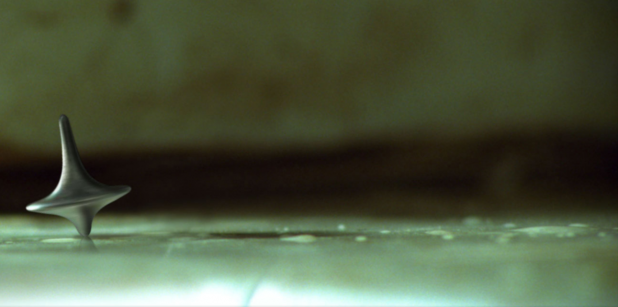
Ein Eintrag in frühen Morgenstunden. Man sollte ja Träume möglichst bald aufschreiben, sonst verfliegen sie…
Ich befinde mich auf dem Gelände der Sekundarschule. Dort wo ich aufgewachsen bin. Aber es ist niemand aus meiner Sekundarschulzeit da – alles ’neue‘ Leute, niemand aus der aktuellen Realität. Aber doch irgendwie alle vertraut… Ob das wohl Leute sind, die ich irgendwann mal noch treffen werde? Von dort könnte das Gefühl kommen, „ah, dich hab‘ ich doch schonmal gesehen. Aber wo?“
Jemand hält mich fest.
Ich reisse mich los.
Sein Hemd reisst. O oh…
Er nimmt mich mit in die Umkleidekabine, wo die anderen warten. Ich stehe in der Ecke, möchte wieder raus – *schubs* – „Du bleibst hier.“
Jemand aus der St. Gallen-Realität ist anwesend. Seltsam… Das kann irgendwie nicht sein. In dieser Umgebung?
Ich realisiere, dass ich träume. Die einzige Möglichkeit, aus dieser Lage herauszukommen, ist aufzuwachen.
Also aufwachen – *anstreng* – 3…2…1…komm schon! Ich schliesse die Augen. Ich träume – aufwachen. Ich kneife mich selber in die Backe. Aua!
Ich wache im alten Zimmer meines Bruders auf. Ein Batterieladegerät liegt am Boden. Alles schaut ‚real‘ aus, wie gerade aufgewacht.
Ich gehe kurz auf’s WC, dann komme ich wieder zurück. Aber Moment. Ich war nie in diesem Zimmer einquartiert. Träume ich etwa noch? Wie kann ich das feststellen?
Ich rattere sämtliche Tricks durch, die ich bis jetzt kenne.
Jemand hat mir mal gesagt, in Träumen würden wir keine Gesichter von Menschen sehen. Ich SAH aber direkt in die Gesichter der Menschen in der Umkleidekabine. Ganz deutlich.
Ok, nächster Trick. Aus dem Film „Inception“ (der übrigens sehr empfehlenswert ist): Sich fragen: „Wie bin ich hierher gekommen?“. Ich bin aus einem Traum aufgewacht. Ja super – dann könnte ich ja überall sein, wenn ich gerade aus einem Traum aufgewacht bin! Überall, wo ein Bett ist.
Verdammt. Bin ich wach? Ich weiss es nicht…
Ich wache auf – im Bett meiner Wohnung in St. Gallen. Kurze Zeit später setzen die Gefühle dieser Realität ein: Ach ja, ich war gerade an einem supertollen Lab, wo wir eine coole Hardwarebastelei gemacht haben.
Das mit den einrastenden Realitätsgefühlen nach dem Aufwachen habe ich öfters schon erlebt. Früher mal: „Ah ja, ich wurde gerade betrieben“ – grrr – der Stein im Bauch macht sich breit, der Tag ist am Arsch. 😛
Oder auch: Hui, war das eine doofe Realität, von der ich grad geträumt hab. Aufwachen – „aah, alles in Ordnung hier!“ 🙂
Ich glaube jetzt bin ich wach. Aber warum ist jetzt hier Schluss? Woher will ich denn wissen, das DAS hier nicht auch ein Traum ist? Mein Unterbewusstsein scheint offenbar die ‚endgültige‘ Realität zu kennen, und auch, in welcher Zeit ich da gerade eingerastet bin. Wir selbst haben keine Chance, das herauszufinden.
Woher weiss denn ein Betriebssystem, dass es virtualisiert ist? Höchstens an der komischen Netzwerkkarte… Und woher weiss es, dass es nicht bereits ein zweites mal virtualisiert wurde? Eine VMWare in einer VMWare. Auf einem Mac.
Schlussendlich sitzen wir davor und beobachten das Ganze. Aber wer sitzt vor uns und beobachtet uns?
Mir schiesst dieser Satz durch den Kopf:
„Hattest du schon mal einen Traum, Neo, der Dir vollkommen real schien? Was wäre, wenn du aus diesem Traum nicht mehr aufwachst? Woher würdest du wissen, was Traum ist und was Realität?“
Ich brauche auch sowas wie ein Totem wie im Film Inception. Ich weiss, dass man mit dem Unterbewusstsein in Symbolen kommunizieren kann. Jetzt suche ich ein Symbol, welches mich sofort aufwachen lässt…
Heilpflanzen in der EU bald illegal
Ich kann gar nicht soviel essen wie ich kotzen möchte.
Laut Europäischer Richtlinie zur Verwendung traditioneller und pflanzlicher medizinischer Produkte (THMPD) wird der Verkauf und die Anwendung von Naturprodukten stark eingeschränkt.
Begründung:
Es handelt sich um eine Richtlinie der EU zur Vereinheitlichung des Zulassungsverfahrens für traditionelle Kräuterzubereitungen, die medizinisch eingesetzt werden. Damit werden Naturprodukte zu medizinischen Produkten umdeklariert, die zugelassen werden müssen. In allen EU Länder wird es dann verboten sein Heilkräuter oder Pflanzen zu verkaufen, die keine Lizenz haben.
Naturstoffe , denen man eine Heilwirkung zuschreibt werden nicht mehr als Lebensmittel eingestuft, sondern als Arznei. Nur was man patentieren und mit einer Schutzmarke im Handel monopolisieren kann ist erwünscht. Was einfach in der Natur wächst ist illegal.
Unsere Gesundheit wird dadurch nicht geschützt, sondern es werden die Umsätze und Profite der Grosskonzerne gesichert. Wir sollten selber entscheiden was gut für uns ist und welche Mittel wir nehmen, ob chemische Bomben oder sanfte Naturheilmittel.
Dadurch erfahren auch Krankenkassen eine Erleichterung weil immer mehr Leute dazu übergehen, Naturprodukte ohne Rezeptschein zu kaufen.
Ja genau. Die Natur kriminalisieren. Damit ihr uns mit eurem Chemiescheiss vergiften könnt.
1. Der ist für euch. Scheiss EU, und scheiss Pharmalobby:

Ihr verdammten Pissköpfe. Manchmal bereue ich’s wirklich, habe ich Informatiker gelernt und nicht Sprengmeister. Zum Glück braucht’s zum Amokschützen keine Ausbildung. Irgendwann… Tu‘ ich euch weh.
2. An alle: Unterzeichnet diese Petition: [Link]
Real Life Popups
Liebes Tagebuch
Ich war gerade an einer Hochzeitsparty. War toll.
Aber die Menschen sind komisch. Die stellen alle immer wieder die gleichen Fragen: „Wie geht es dir?“. Und Leute, die mich zum ersten mal sehen, fragen dann meistens zusätzlich: „Was machst du?“
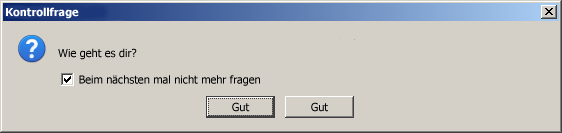
„Gut“, antworte ich. Ich weiss gar nicht was die Frage überhaupt soll. Klar geht’s mir gut, ich habe gerade massig das Dessertbuffet degustiert.
Aber ich würde auch „gut“ antworten, wenn’s mir schlecht geht. Weil nach einem „gut“ ist meistens Ruhe – ein „schlecht“ müsste ich garantiert noch begründen, dann wird sicher nachgefragt. Das ist mühsam und unnötig.
Ganz anders Kinder. Da hatte es ein Kind an dieser Hochzeitsparty, das kam einfach so auf mich zu und hat mich angesprungen. Ich hab‘ dann zurückgepufft und wir haben uns kurz durch die Küche gejagt =)
Das war sehr erfrischend.
Kinder wollen spielen und scheren sich nicht drum, wie’s mir grad geht und was ich so mache. Ich kann einfach so sein wie ich bin und wie ich mich gerade fühle, ohne zuerst die dämlichen Kontrollfragen beantworten zu müssen.
Ich steh‘ am Aperotisch. Hoffentlich kennt mich niemand. Nein, du kennst mich nicht – wegschauen. Es kommt auf mich zu, oh nein… „Hoi Claude, wie geht’s dir?“ Zu spät. Ich spiele mein Tonband ab. Was mach ich? Mal überlegen… Ach ja, ich wohne in St. Gallen. Allein. Und ich bin Informatiker. Webentwickler. Bei Namics.
So. *zurückspul* – der nächste bitte. Ihr seid echt öde!
Ich weiss jetzt, warum ich mit Maschinen besser klarkomm als mit Menschen. Die Maschine kümmert sich genau so einen Dreck darum, wie es mir geht und was ich so mache. Ich kann die einfach so einschalten und benutzen. Damit spielen, was kreatives damit anstellen, Hackedihack – und sie dann wieder ausschalten. Das kann ich einfach so tun, ohne befürchten zu müssen, ob sie ächt schlecht über mich denkt, wenn ich mal was verbock.
Aber ich hab‘ glaubi eine neue Leidenschaft entdeckt: Ich durfte die Lichtsteuerung für die Bühne übernehmen. Ziemlich cool, ein Setup für Sketches und Rede, und ein episches für Musikbeiträge – und dann mit dem Lichtcrossfader hin- und herswitchen. Gefällt!
So konnte ich doch noch was nützlich nerdiges tun an diesem Abend, die Leute ins rechte Licht rücken und für die optische Stimmung sorgen. Ja, Lichttechnik macht wirklich Spass!
Zehntausend Anfragen pro Sekunde.

Kunde möchte eine voraussichtlich stark frequentierte Seite mit Typo3 bei sich hosten.
Erwartet werden 5000 Benutzer gleichzeitig – die geschätzt alle 10 Sekunden klicken. Ergibt 500 Requests/s. Wir sollen die Architektur vorschlagen.
about:software
Man sollte schlechte Software nicht mit top Hardware erschlagen.
Sondern schlechte Hardware mit top Software.
Was ist denn überhaupt Realität?
„Eine Realität nur für sich allein schaffen“, wiederholte Veronika. „Was ist denn überhaupt Realität?“
„Sie ist das, von dem die meisten glauben, dass sie so sein sollte. Nicht unbedingt besser, nicht logischer, doch den kollektiven Wünschen angepasst.
Sehen Sie, was ich da um den Hals trage?“
„Eine Krawatte.“

„Sehr gut. Ihre Antwort ist logisch, kohärent, die eines ganz normalen Menschen: eine Krawatte!
Ein Verrückter würde jedoch sagen, dass ich ein buntes, lächerliches, nutzloses, auf komplizierte Weise geschlungenes Stück Stoff um den Hals trage, das die Beweglichkeit des Kopfes einschränkt und uns zwingt, tiefer zu atmen, damit Luft in die Lungen gelangt. Wenn ich in der Nähe eines Ventilators bin und nicht aufpasse, kann dieses Stück Stoff mich erwürgen.
Wenn ein Verrückter mich fragt, wozu eine Krawatte gut ist, muss ich ihm antworten: zu überhaupt nichts. Nicht einmal zum Verschönern, weil sie heute zum Symbol der Versklavung, der Macht, der Distanz geworden ist. Die Nützlichkeit der Krawatte besteht darin, nach Hause zu kommen und das Gefühl zu genießen, dass wir uns von etwas befreit haben, von dem wir nicht einmal wissen, was es ist.
Doch rechtfertigt dieses Gefühl der Erleichterung die Krawatte?
Nein. Dennoch wird, wenn ich einen Verrückten und einen normalen Menschen frage, was das ist, derjenige als gesund erachtet, der mir antwortet: eine Krawatte. Gleichgültig, wer es richtig sieht oder wer recht hat.“